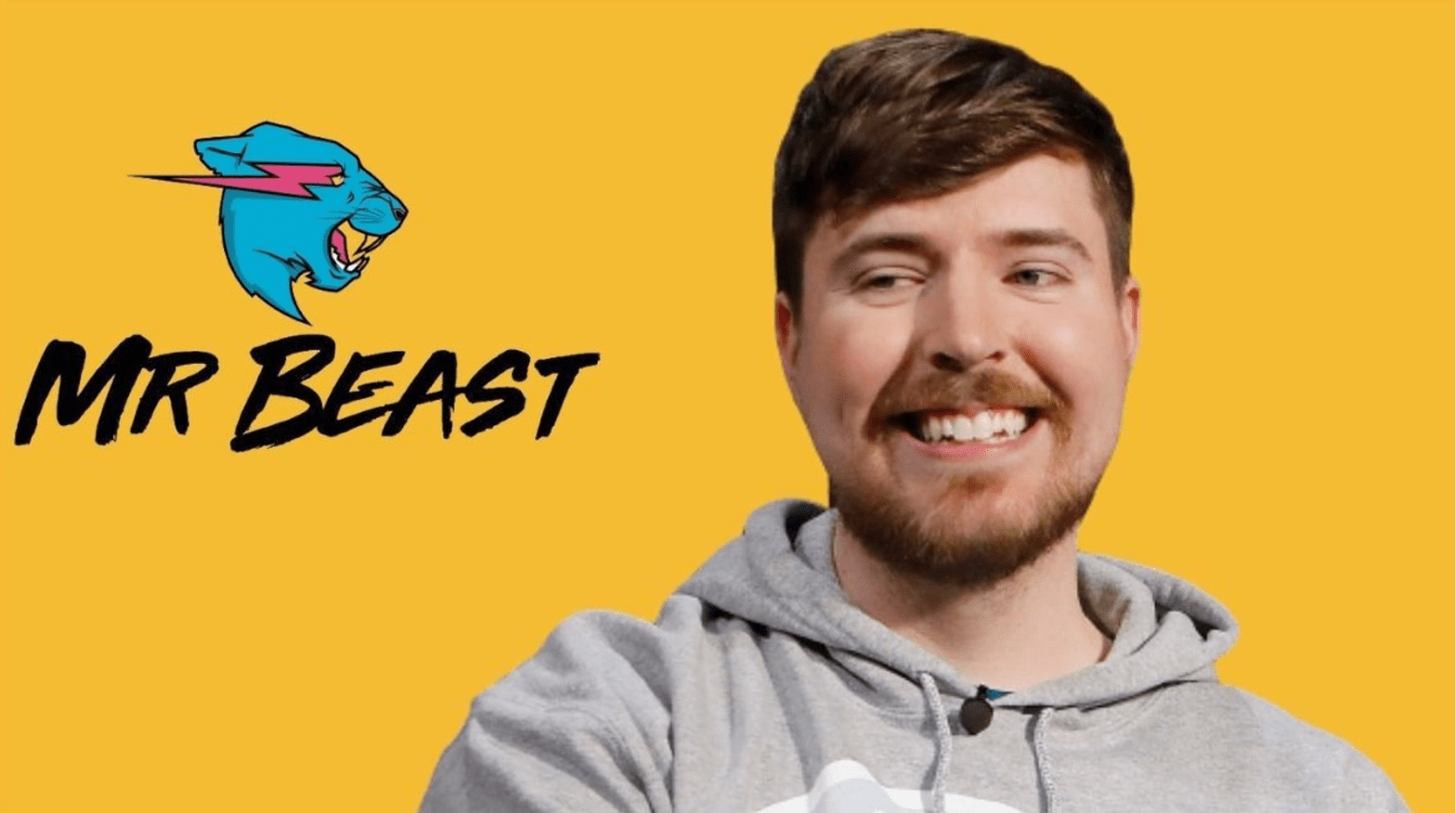
After over seven months in hiatus (mainly due to a major business transition in the digital marketing company which this Branding Nerd was previously leading) I am very happy to be back on the saddle to write this blog about a topic that I was recently asked to talk about in front of around 200 market research professionals in the Philippines.
Therefore, this blog will also serve as a sharing of my actual talk, including a considerable discussion on branding, culminating with a discussion about this blog’s featured brand, MrBeast, which was the highlight of my talk.
So just as a heads up dear reader, this blog will be a bit longer than the usual blogs of Branding Nerd. But hopefully, you find this useful.
The MORES Philippines 2024 Congress
Last May 10, 2024, I gave a talk in the recent MORES Philippines 2024 Congress on the topic “Branding in the Future“. As I admitted to the delegates right at the onset, I was quite daunted by this topic because frankly, no one really knows.
However, looking back at lessons and brand principles from yesteryears, and observing leading brands and trends today, we can gain some insights on how branding may look like in the future. That’s why I decided to outline my talk in three main sections, namely:
- Yesterday
- Today
- Tomorrow
I strongly believe that there are some very fundamental things from yesterday, and irreversible trends today which will most likely continue to shape branding into tomorrow, as new ideas, concepts, platforms and technologies continue to develop.
Yesterday
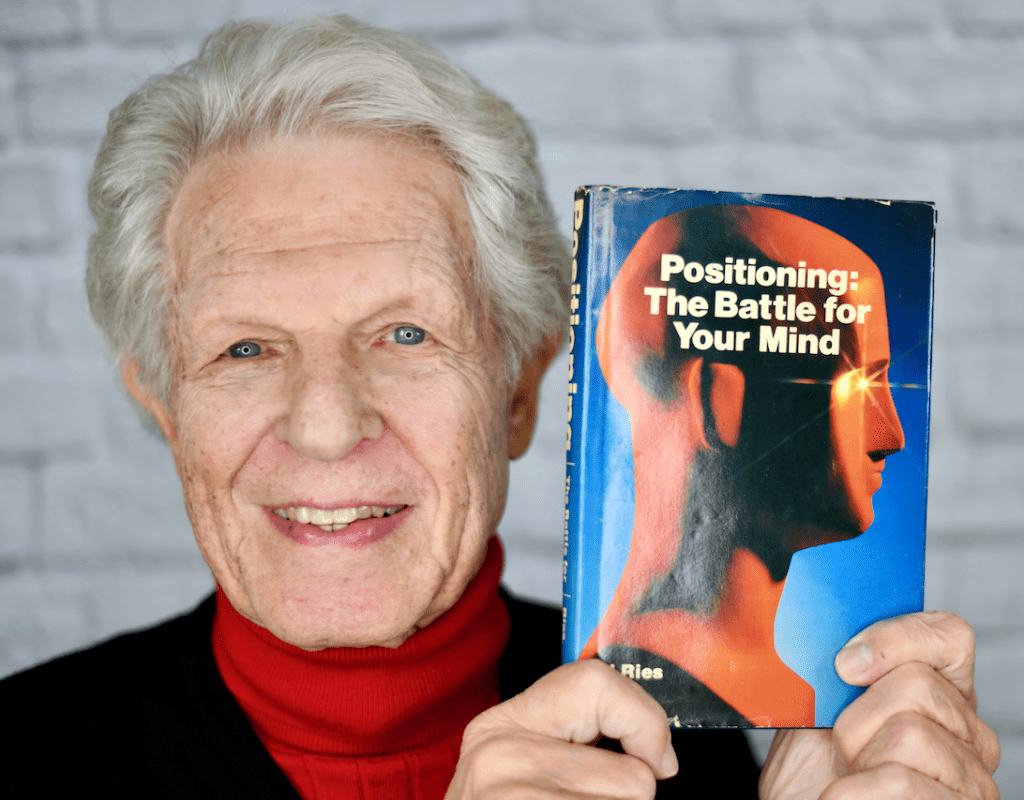
In the very first module of the training x workshop which I conduct called ‘The Brand Architecture‘, I normally consume a good amount of time discussing the very definition of ‘Branding‘. As I’ve shared in previous blogs, the definition of branding which I find to be quite precise and concise is the one that comes from well-known brand x marketing guru Al Ries, co-author of the seminal book ‘Positioning: The Battle for Your Mind‘.
His definition is this:
“Branding is a singular idea or concept which you own in the mind of the prospect.”
During the MORES 2024 Congress, without revealing the brands, I gave two examples of singular concepts (represented by brand slogans) and asked the delegates to guess the brand.
The first concept that I showed in plain text was “Let’s fly every Juan“.
And almost immediately, the audience correctly guessed that this concept was owned by Cebu Pacific®.
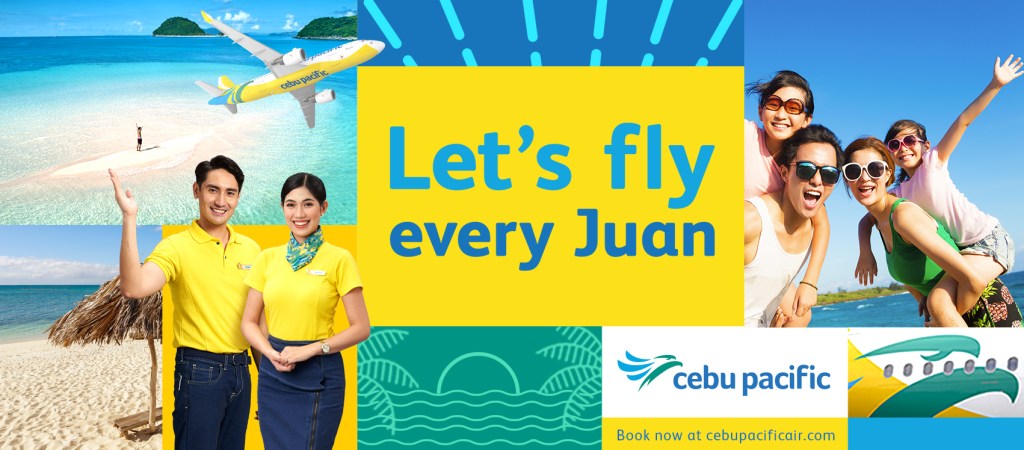
This is the third iteration of the original battlecry of “Every Juan Must Fly” during the relaunch campaign of Cebu Pacific®, but the essence of their brand positioning remains the same: mass-market, affordable, safe and friendly air travel.
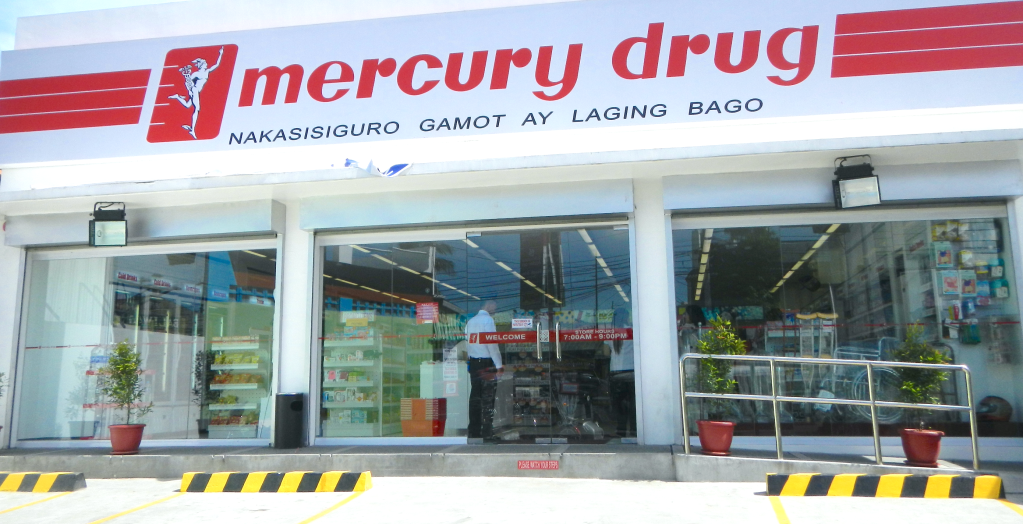
I shared a second local concept which is “Nakasisiguro Gamot ay Laging Bago” (which means, ‘You can be sure that our medicines are always new‘). And once again, the delegates quickly and correctly guessed that this concept is owned by Mercury Drug®.
These singular concepts of ‘Let’s Fly Every Juan‘ and ‘Nakasisiguro Gamot ay Laging Bago‘ are clearly owned by Cebu Pacific® and Mercury Drug® inside the minds of its target market. These brands have achieved the very definition of what a brand is.
I always emphasize that it is not what the brand owner thinks what the brand is, rather, it is what is in the mind of the prospect x customer x consumer which determines what the brand is.
Therefore, the first key learning from ‘Yesterday‘ is that this definition, which has remained true in the past decades, I believe will continue to remain true going into the future.
The second key learning from the past is based on the first (out of six) positioning principle developed by Laura Ries (daughter of Al Ries) which she refers to as “Finding the Open Hole“. As I’ve shared in previous blogs, an ‘open hole‘ is a space in the market which is highly relevant to the target market (based on important factors or attributes), but no brand strongly owns that space.
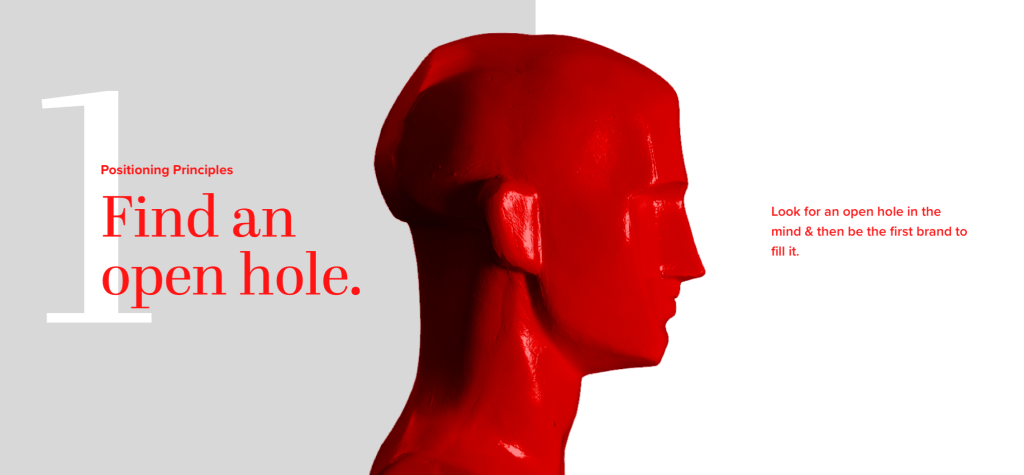
I am of the belief that even if a market is highly competitive, very crowded and already led by a dominant market leader, a new entrant can still find an open hole and position its brand in that space. The key is to: (a) have a clear understanding of the most important factors that the customer or consumer is looking for in a particular market category, and (b) also knowing exactly how the current competitive brands are positioned and perceived in that market category. This combined consumer x competitive analysis is key to finding the open hole for your brand.
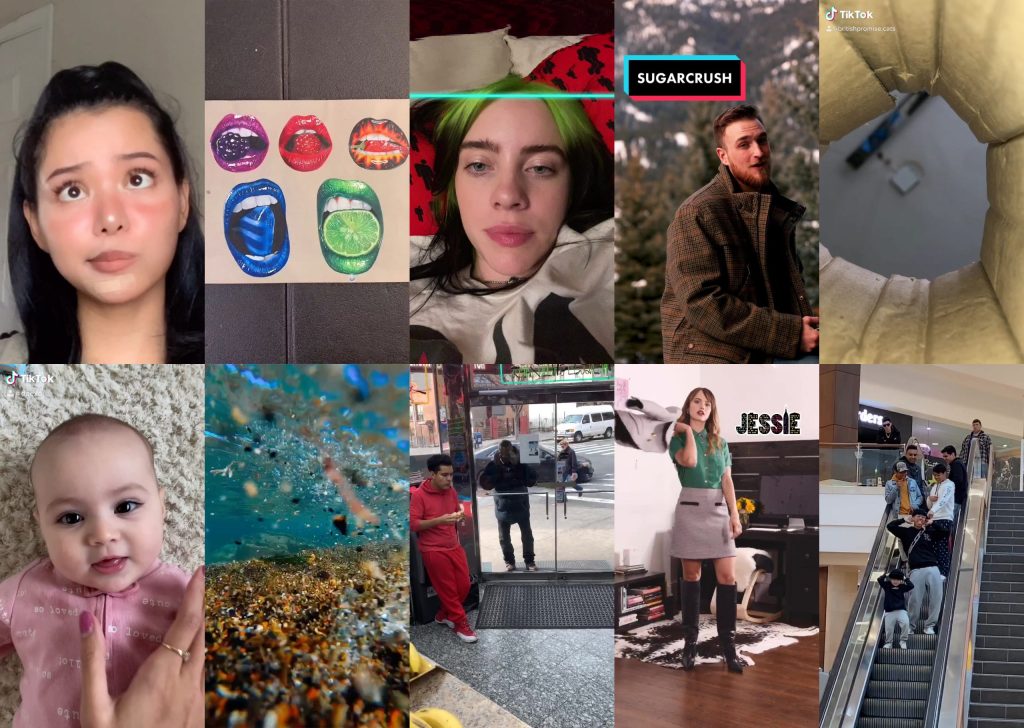
One of the examples I gave during the 2024 MORES Congress was TikTok®.
Its original battlecry gives us a clue with regards to the open hole that they found in the highly competitive and highly crowded social media market dominated by Facebook® during the year that TikTok® was launched in 2016.
The original battlecry of TikTok® was ‘Real People, Real Videos‘.
It is very likely that TikTok® identified both ‘authenticity‘ (i.e. real people), and ‘relatable video content‘ (i.e. real videos) as very important factors that consumers of social media were looking for. And if we look back eight years ago, we would note that Facebook® was not particularly strong in these factors. Therefore, it was an open hole wherein TikTok® was able to position itself in and run away with. As of today, the brand has over 1.5 billion users, even though it was launched (in 2016) over a decade after Facebook® (2004), making TikTok® the fastest growing social media platform in the market today. Their global success forced Facebook® to launch Reels back in 2021, but this was already five years behind TikTok®.
So the second ‘Yesterday‘ lesson is that a brand that is able to position itself in an ‘open hole‘ places itself in a strong position to grab share in the market, and can even take the leadership position.
Just like the definition of branding by Al Ries, I believe this first positioning principle of ‘Find an Open Hole‘ from Laura Ries will remain relevant and critical for any brand in the years to come.
Finally, the third key lesson from yesterday is ‘Customer-Centricity’.

Given that my audience was a ballroom full of market research professionals, I took the opportunity to emphasize how critical their role is in the designing, building and sustaining of brands for the long-haul.
In all my training and workshop sessions with companies, I always underscore the importance of market research and truly understanding the target market of each brand. Just like Jeff Bezos, I firmly believe that constant innovation by brands across the 6 Ps of marketing through the years and decades always need to be based on what the customer x consumer needs and wants.
And just like the first two lessons from yesterday, this third key lesson on customer-centricity will never go out of style today and tomorrow.
Today
Let’s move on to ‘Today‘.
First of all, to say that digital is a dominant part of our daily lives is simply stating the obvious.
The same is true for branding today. Branding is deeply immersed into today’s digital world.
According to Global World Index (or GWI), seven out of the top ten sources of information about brands x products in 2023 were via online platforms or channels.

When I was initiated into the world of brands in the mid-1980s, TV advertising consumed north of 70% of marketing budgets since this was the main source of information about brands during that era. Today, it has become second only to search engines which includes global market leaders Google® and YouTube®, both owned by Alphabet Inc. And with the rapid technological developments like Artificial Intelligence (AI), Augmented Reality (AR) and Blockchain, today’s digital impact on branding can only become even more and more pronounced tomorrow.
Secondly, due to the increasing dominance of digital in the way consumers discover and engage with brands, the linear funnel consumer journey has been replaced by the the loop consumer journey.

A study by Latitude Research and About.com featured in MarketingProfs highlights some key insights into this loop consumer journey model of today:
The feature states that: “Most consumers move along a complex, non-linear pathway to their final purchase:
- 83% say their path to purchase may involve a greater number of ‘stops’, but it takes less time than it used to overall.
- 73% say their path to purchase is more complex and less direct than before.
Also, shopping today is a more personal and emotional experience:
- 79% of consumers say their relationship with brands is much more personal than ever before.
- 68% say shopping today is “less about the brands/products themselves and more about me (e.g., what I’m feeling or needing).”
These findings point to a model wherein the various digital touch points of a brand today have provided a complex web of experiences that affect consumers at a very personal level which could compel an immediate purchase at any point within the loop. For example, a consumer may decide to immediately buy a product simply because a famous content creator whom he or she closely follows featured a particular brand or product within their content. And these types of micro-moments happen billions of times a day, enabled by digital.
So the second lesson from ‘Today‘ is that brands that are able to establish a strong connection with consumers thru digital and have built shared values with their market through multiple touchpoints in the consumer’s looping journey are likely to command a formidable brand equity that drives purchase of its products and services.
Tomorrow
Finally, let’s take a look at ‘Tomorrow‘.
According to The Branded Agency, there are four key values that will drive the brands of tomorrow, namely:
- Emphasizing Authenticity: A study by Label Insight revealed that 94% of consumers are likely to be loyal to a brand that offers complete transparency.
- Purpose Beyond Profit: According to a 2023 Nielsen report, 73% of millennials are willing to pay extra for sustainable offerings.
- Cultural Sensitivity and Social Responsibility: A survey by Adobe found that 61% of consumers believe diversity in advertising is important.
- Sustainable Practices: Research indicates that companies committed to sustainability practices saw a 4% higher annual return than their counterparts that didn’t prioritize sustainability.
This blog will not attempt to provide an exhaustive view of branding in the future. Instead, I will focus on just one area of branding which is proving to create a significant impact on the way brands are developed and sustained in the future which are very much aligned with the above key values.
That area in branding is known as the ‘Creator Economy‘.
What is the Creator Economy?
Wikipedia defines it this way: ‘The creator economy or also known as influencer economy, is a software-facilitated economy that allows content creators and influencers to earn revenue from their creations.’
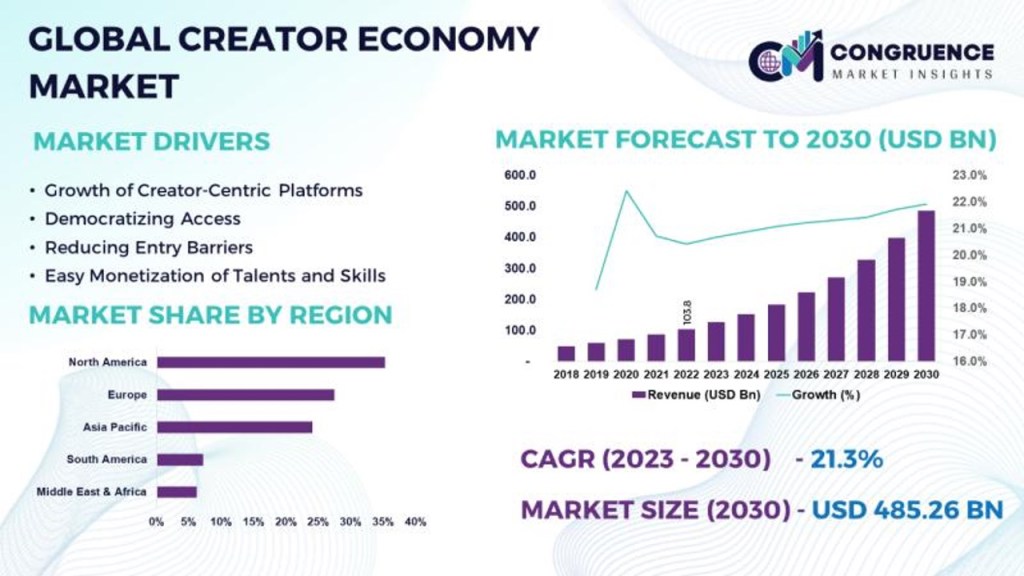
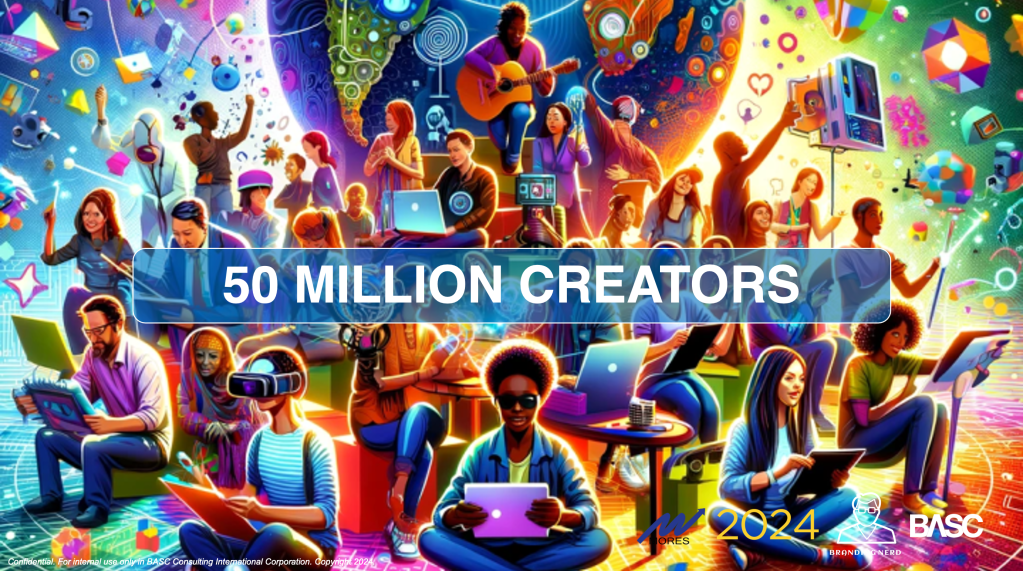
According to Congruence Market Insights, the estimated size of the creator economy was over US$100billion back in 2022. It is projected to grow to almost half a trillion US dollars in just six years from now. “About 50 million people, including artists, gaming streamers, video creators, podcasters, musicians, and social-media influencers, now consider themselves part of the creator economy, according to venture capital firm SignalFire, which calls this space ‘the fastest-growing type of small business‘“.
It is estimated that out of today’s 50 million creators, only around 2% (or around 1 million) are considered ‘professional‘, meaning, they each have at least one million subscribers x followers.
And amongst these professional creators, there is one YouTube® brand which occupies the top spot, and that is no other than MrBeast® who commands an incredible 260+ million subscribers in YouTube®.
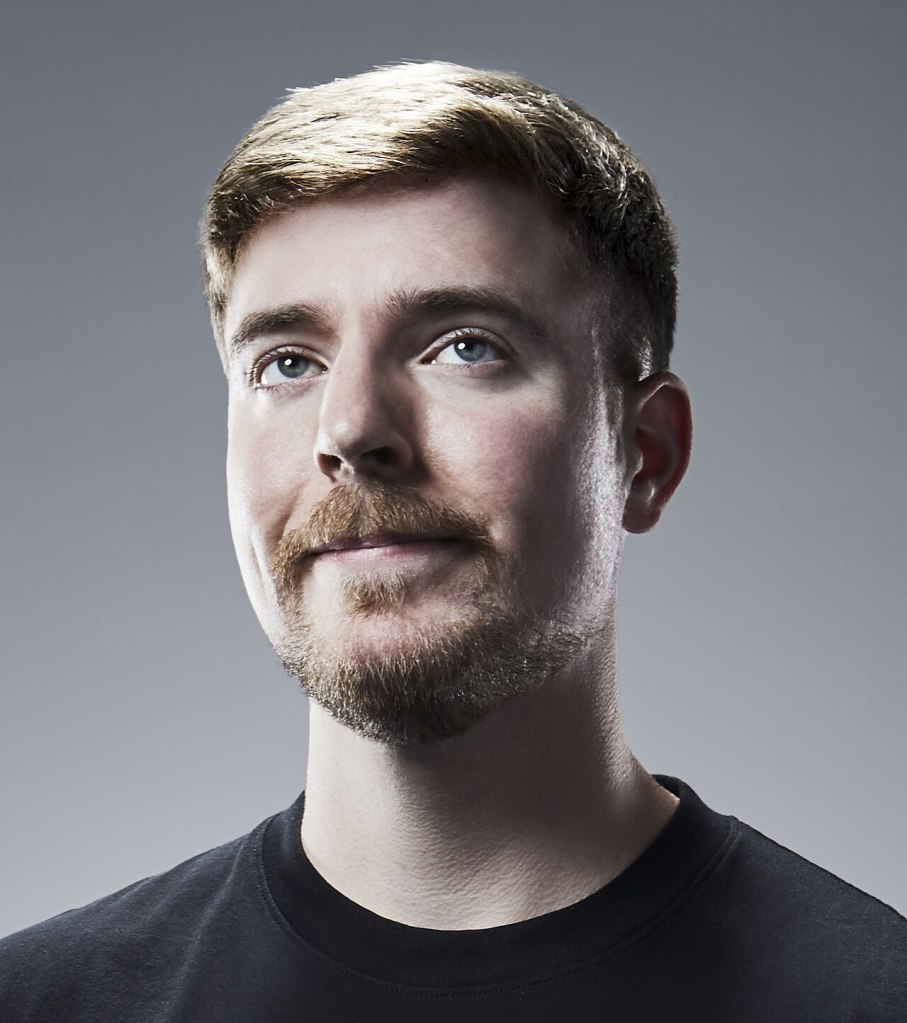
According to Wikipedia: “James Stephen “Jimmy” Donaldson (born May 7, 1998), better known by his online alias MrBeast, is an American YouTuber, online personality, entrepreneur, and philanthropist. He is known for his fast-paced and high-production videos, which feature elaborate challenges and large giveaways. With over 261 million subscribers, he is the most-subscribed individual on YouTube and the second-most-subscribed channel overall.”
He had relatively low traction in his first few years as a YouTuber starting in 2012. But in 2017, his big break came when he created a video of him counting from 1 to 100,000. It was characteristically outrageous, unique, entertaining, and wholesome.
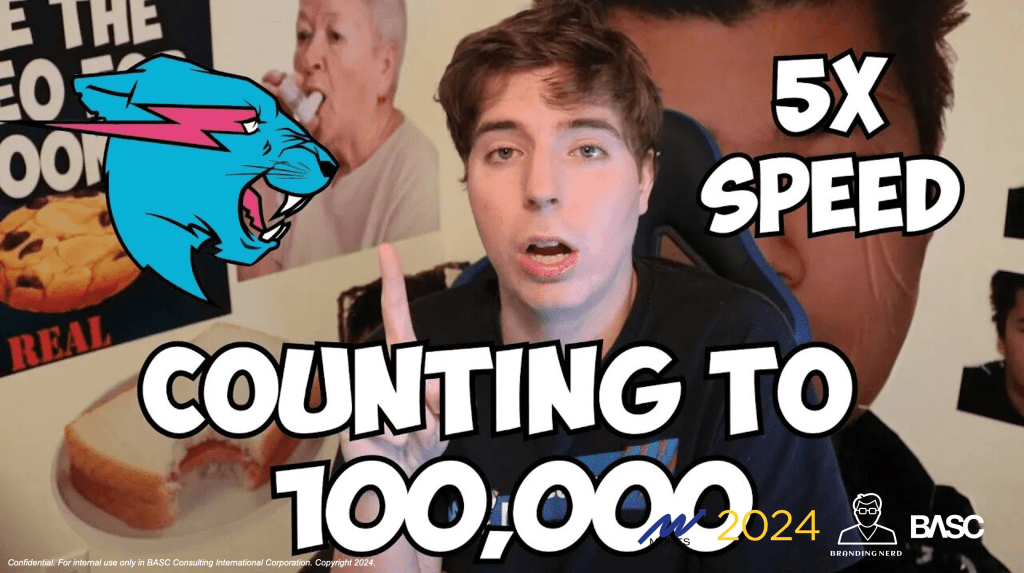
This video earned him tens of thousands of views in just a few days. He has gained popularity steadily since then, with most of his videos garnering tens of millions of view. His videos have grown more grand and extravagant over time.
Essentially, MrBeast® stumbled upon an open hole in the YouTube consuming market: wholesome but outrageously entertaining, extravagant and unique content.
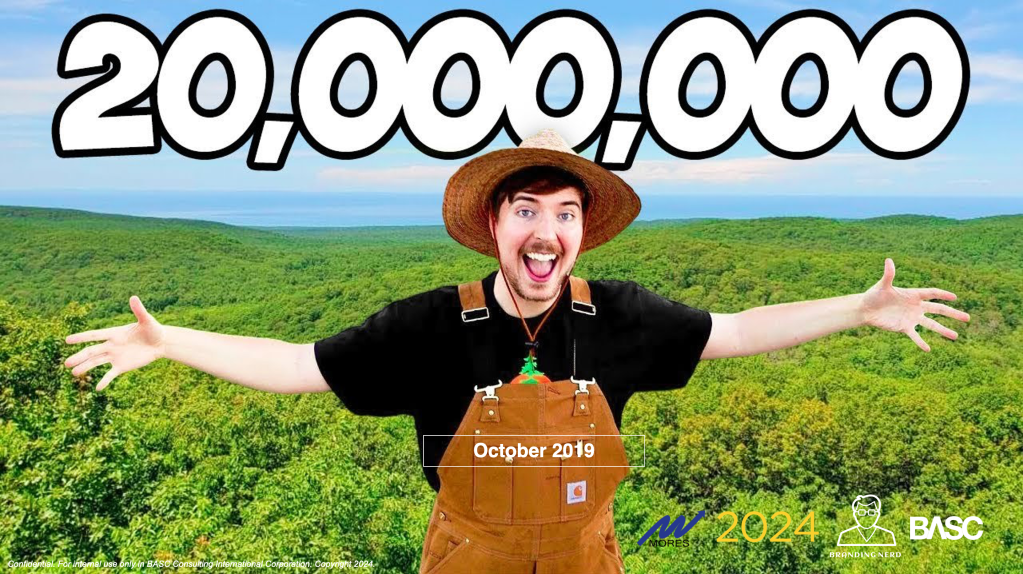
When his subscribers hit the 20 million mark, one of his fans posted on May 24, 2019 a challenge to MrBeast® on Reddit: to plant 20 million trees to celebrate the new milestone.
Without missing a beat, MrBeast®, together with fellow YouTuber Mark Rober, took on the challenge and launched #TeamTrees. All donations go to the Arbor Day Foundation, a tree planting organization that pledges to plant one tree for every U.S. dollar donated.

As of this writing, #TeamTrees has planted 24,717,375 trees, well surpassing its original target of 20 million trees. The environmental impact of this so far is estimated to absorb over 1.6 million tons of carbon and remove 116 thousand tons of pollutants from the atmosphere.
Even billionaire Elon Musk took notice and got in to the action, donating US$1million to plant 1 million trees.

The #TeamTrees initiative proved to be the second major inflection point of MrBeast® which catapulted the brand into stratospheric YouTube® heights. As of today, MrBeast® occupies the top spot at over 261 million subscribers.

MrBeast continued to churn out highly entertaining and extravagant videos which only fueled his meteoric rise in this leading platform.
However, what set up him apart was his pursuit of one of the four key values discussed earlier, namely ‘Purpose Beyond Profit‘ which truly endeared MrBeast® to his followers. A clear manifestation of this was the launch of Beast Philanthropy which was founded on September 17, 2020 with a clear battlecry: ‘Make the World a Better Place“.
Its website states: “In June 2017, when Jimmy Donaldson (AKA MrBeast) received his first YouTube sponsorship deal of $10,000, he wondered, “how can I transform this money into something good?” Not wanting to keep the money for himself, Jimmy agreed to the sponsorship deal with one condition: he was able to give away all of the money. The sponsor agreed.
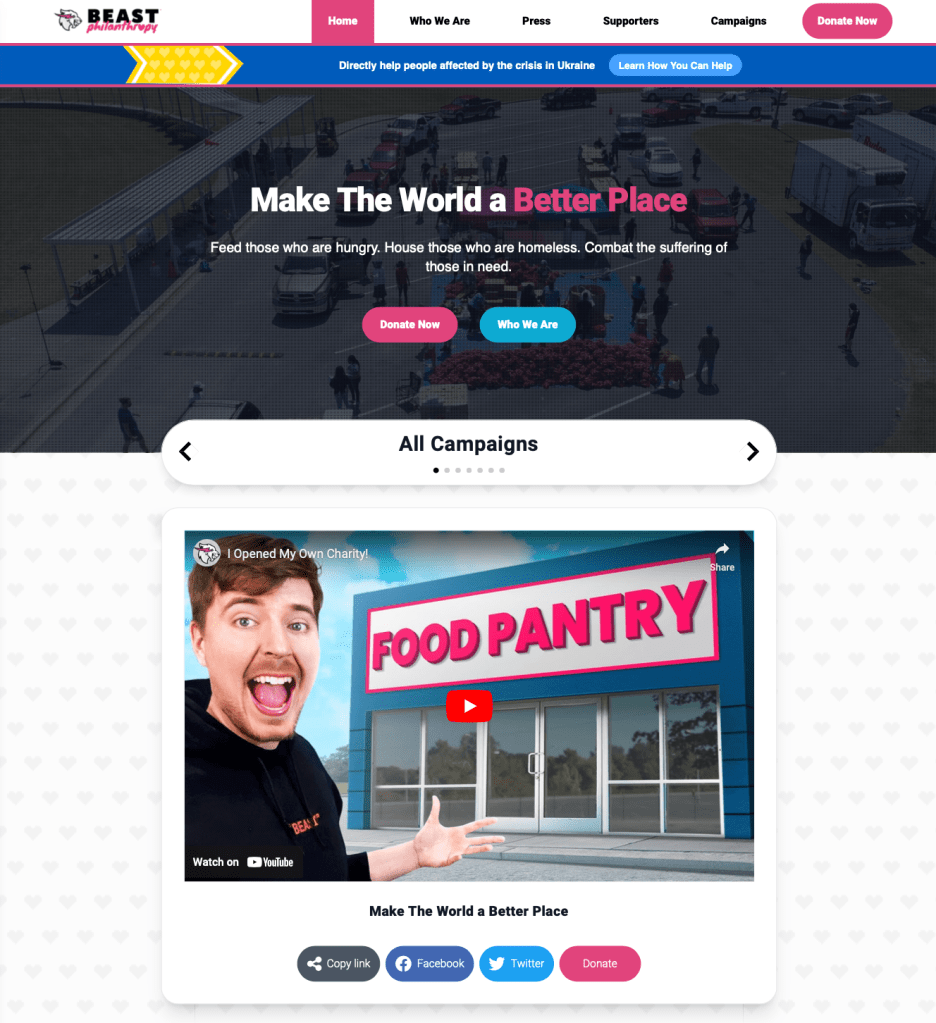
“The first giveaway ignited a flame within Jimmy, and every charitable act fueled his desire to help those in need.”
“Jimmy stayed true to his word and gave away the full $10,000, but he quickly realized that handing someone an envelope of cash was not enough. This first giveaway ignited a flame within Jimmy, and every charitable act fueled his desire to help those in need.
“Over the next few months, MrBeast started giving money to Uber drivers, to pizza delivery drivers, and Twitch streamers. Jimmy enjoyed the genuine reactions from his recipients, and he quickly realized how lives were being changed. It became Jimmy’s mission through video integration to help as many people as possible overcome barriers.”
Not only did his popularity rise significantly, but also his net worth.
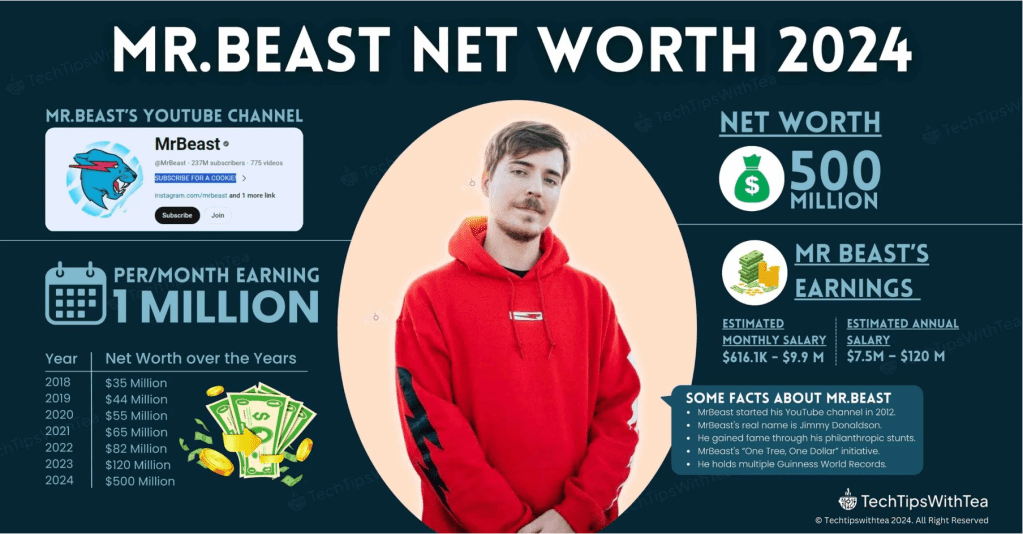
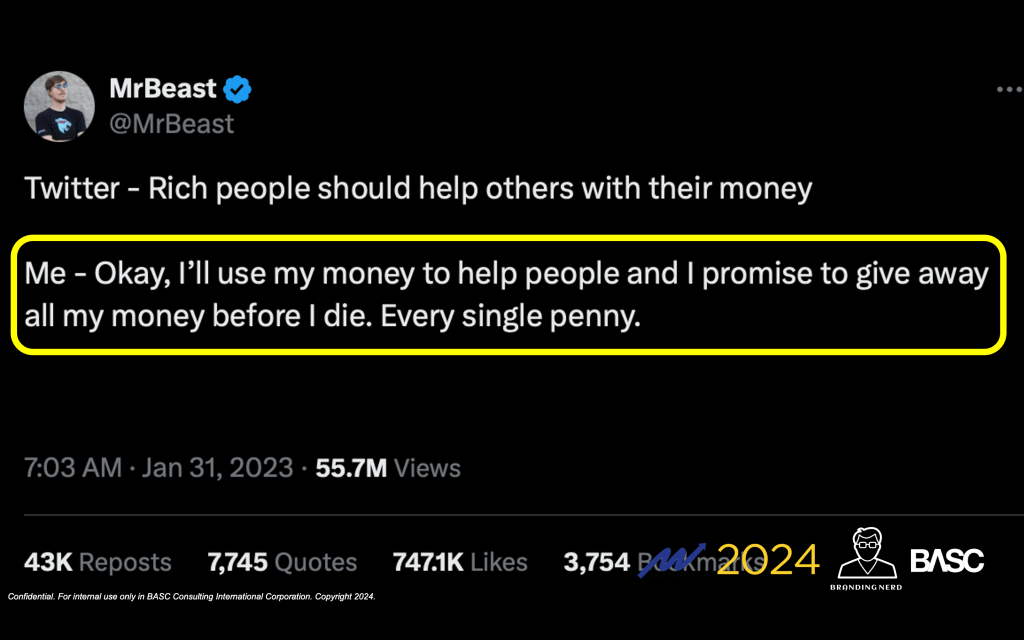
As of this year, his estimated net worth is around half a billion US dollars. Just for comparison, the net worth of Tom Cruise, a 40-year veteran of the movie industry is only slightly above him at US$600million. Whereas for MrBeast®, it only took him around seven years to reach this level. And yet despite his phenomenal financial success, MrBeast® insists that he is “...numb to money.” Vowing to give away all his money before he dies.
But there’s even more.
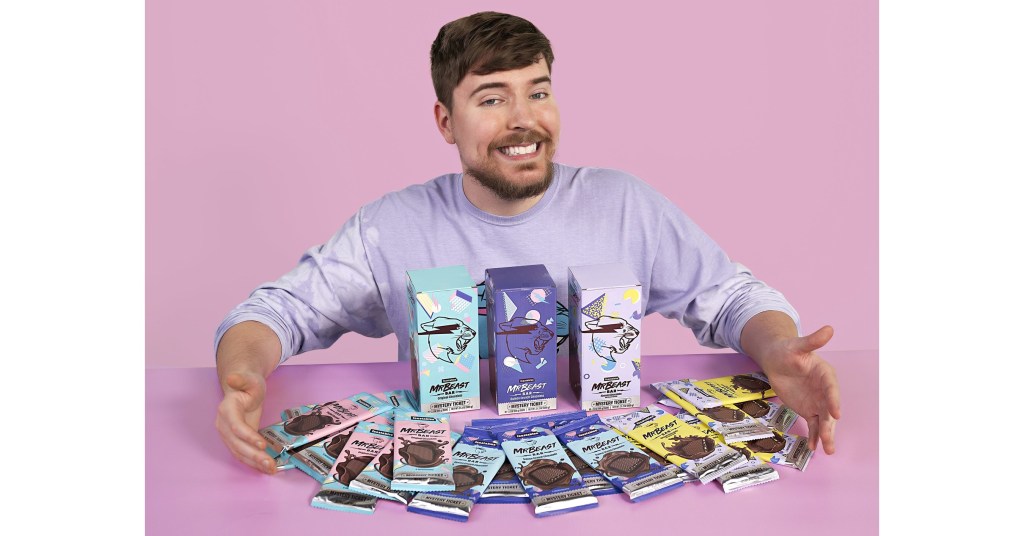
In early 2022, Mr. Beast® extended his YouTube brand to take on the competition in a highly maintstream business segment: the business of chocolates dominated by household and well-established global, brand names like 130-year old Hershey’s®, 113-year old Mars® and others.
It was the exact reverse of how traditional brands approach the market today. Whereas, brands nowadays work with creators x influences to help their brands engage with its target consumers, MrBeast® used the power of its own creator brand to influence its market to purchase his own products.
Checking the box on the ‘Sustainable Practices‘ value, MrBeast Feastables® went for the open hole of ‘better for you chocolate bars‘ (with only 5 ingredients) and priced it at a premium.
Its initial foray into the chocolate market proved a failure because of the inferior taste versus competitors which he would quickly find out through his enviable power of rapid feedback from his fans (i.e. customer-centricity). He learned that the attribute of taste was a more important factor compared to health. So while health was an important attribute, it had to satisfy the taste attribute as well.
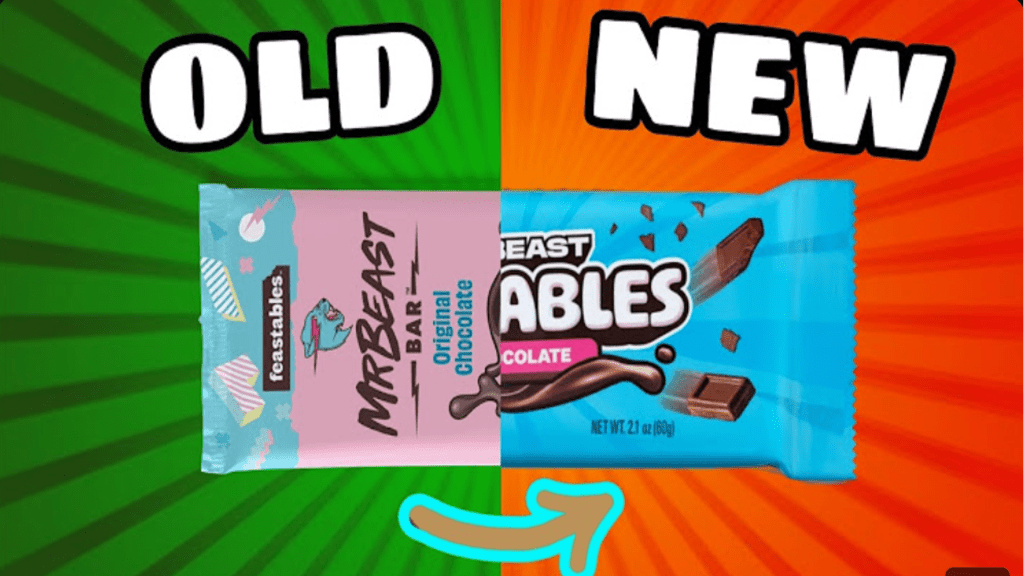
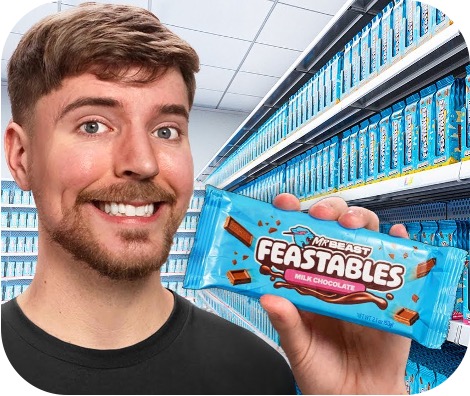
Armed with this insight, MrBeast Feastables® quickly changed its formulation and has since proven to be a better product offering in blind taste tests versus competition. Now available in leading retailer brands including all Walmart® stores and Target® in the US, Woolworths® in Australia, Waltmart-owned Makro® in South Africa, and much more, the first twelve months sales is estimated at around US$75milllion.
Key Lessons
It’s still too early to tell on how MrBeast® will fare in this market segment, but it certainly provides us a glimpse of how brands can be created, developed and sustained in the future:
- MrBeast® was able to own the singular concept of wholesome, extravagant and highly entertaining content in YouTube®.
- MrBeast® found this open hole and owned it with consistent and relentless execution of its content.
- MrBeast® leveraged on the power of YouTube® as a digital x search platform in creating a massive global community.
- MrBeast® was able to strongly establish credibility in sustainability, authenticity and purpose beyond profit which are important brand values going into the future.
- MrBeast® understood the consumer journey loop and leveraged its compelling brand equity to engage with its fans with mainstream products like chocolates (and even burgers).
- MrBeast® demonstrated its consumer-centricity by quickly responding to the feedback on its first chocolate bar range and relaunching it with a much improved formulation.
And yet, we are just witnessing the beginning of the Creator Economy, led by MrBeast®. Just the tip of the creator iceberg, so to speak.

As more and more professional creators flex their muscles in the various verticals where they exist, we will likely see the spawning and more and more brands that will certainly occupy open holes yet to be found as these creators directly engage with their followers.
Branding in the future is truly full of so many new exciting possibilities!
We’d love to hear from you!
In case you wish to ask for more information about this blog or other ways for Branding Nerd to be of help, please feel free to leave us a message by using the simple form below. Thank you for being here!


 Branding Nerd
Thanks for sharing your insights, Bingo. Very educative as always. More blessings.
LikeLike
Thank you very much Geocel for the encouragement! Much appreciated! Blessings.
LikeLike
Thanks Bingo. Have not forayed into a marketing article in decades…and I enjoyed this immensely. Learned much too…of how the world has changed…while some very basic marketing concepts remain tested and true. To open holes and loops and creator economies…onwards! Nice one!
LikeLike
Thank you very much for this Ana! 🙂 I’m very happy that you enjoyed this! I also learn much while developing each of these blogs. Always a joy to discover new things about brands and related trends in marketing. Blessings.
LikeLike